ONLINE MENTORING FOR ADVANCED CLASSICAL MUSICIANS
ONLINE MENTORING FOR
ADVANCED CLASSICAL MUSICIANS
Cristo Barrios
Mentoring
Online mentoring for advanced classical musicians preparing auditions,
competitions, repertoire, concert projects or their next professional step
Interpretative and artistic mentoring
for musicians preparing auditions,
competitions, repertoire projects
or their next professional step
A short form for advanced musicians considering regular mentoring
with Cristo Barrios
A short form for advanced musicians considering
regular mentoring with Cristo Barrios
ONLINE MENTORING FOR ADVANCED CLASSICAL MUSICIANS
ONLINE MENTORING FOR
ADVANCED CLASSICAL MUSICIANS
Cristo Barrios
Mentoring
Interpretative and artistic mentoring for musicians preparing auditions,
competitions, repertoire projects or their next professional step
Interpretative and artistic mentoring
for musicians preparing auditions,
competitions, repertoire projects
or their next professional step
A short form for advanced musicians considering regular mentoring
with Cristo Barrios
A short form for advanced musicians considering
regular mentoring with Cristo Barrios
THE MAITE METHOD
Learn the violin
with a
clear structure
From first setup to your first real pieces
➤ 25+ yrs teaching ➤ 3 degrees
➤ 50K+ students online
Serious violin learning for students who value structure and quality.
A clear method
changes everything
For musicians at a decisive point
For musicians at
a decisive point
Focused guidance for advanced classical musicians who need to prepare repertoire, organise
an audition or competition, develop a concert project, or clarify their next professional step
Focused guidance for advanced
classical musicians working on
interpretation, repertoire or
their next professional step
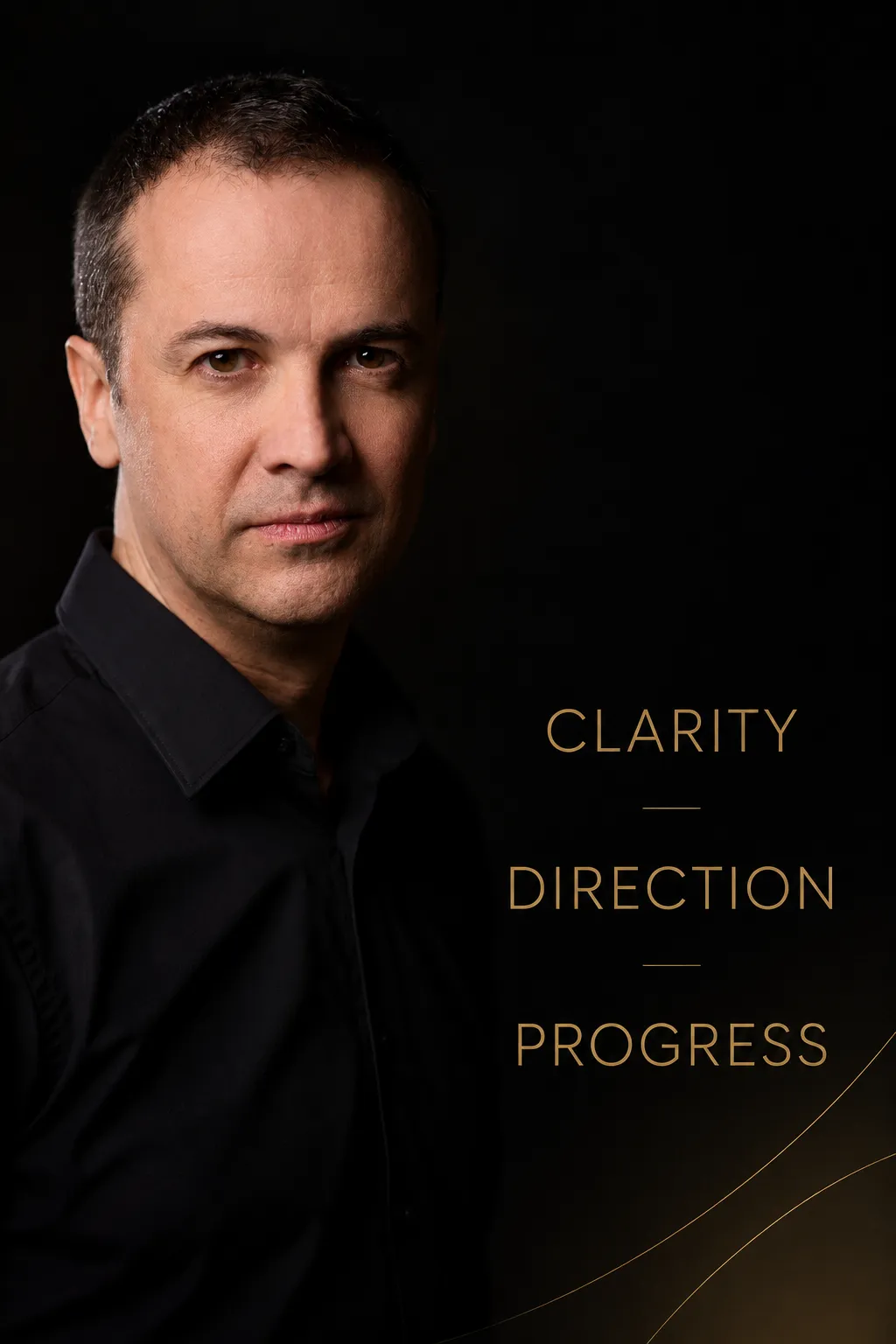
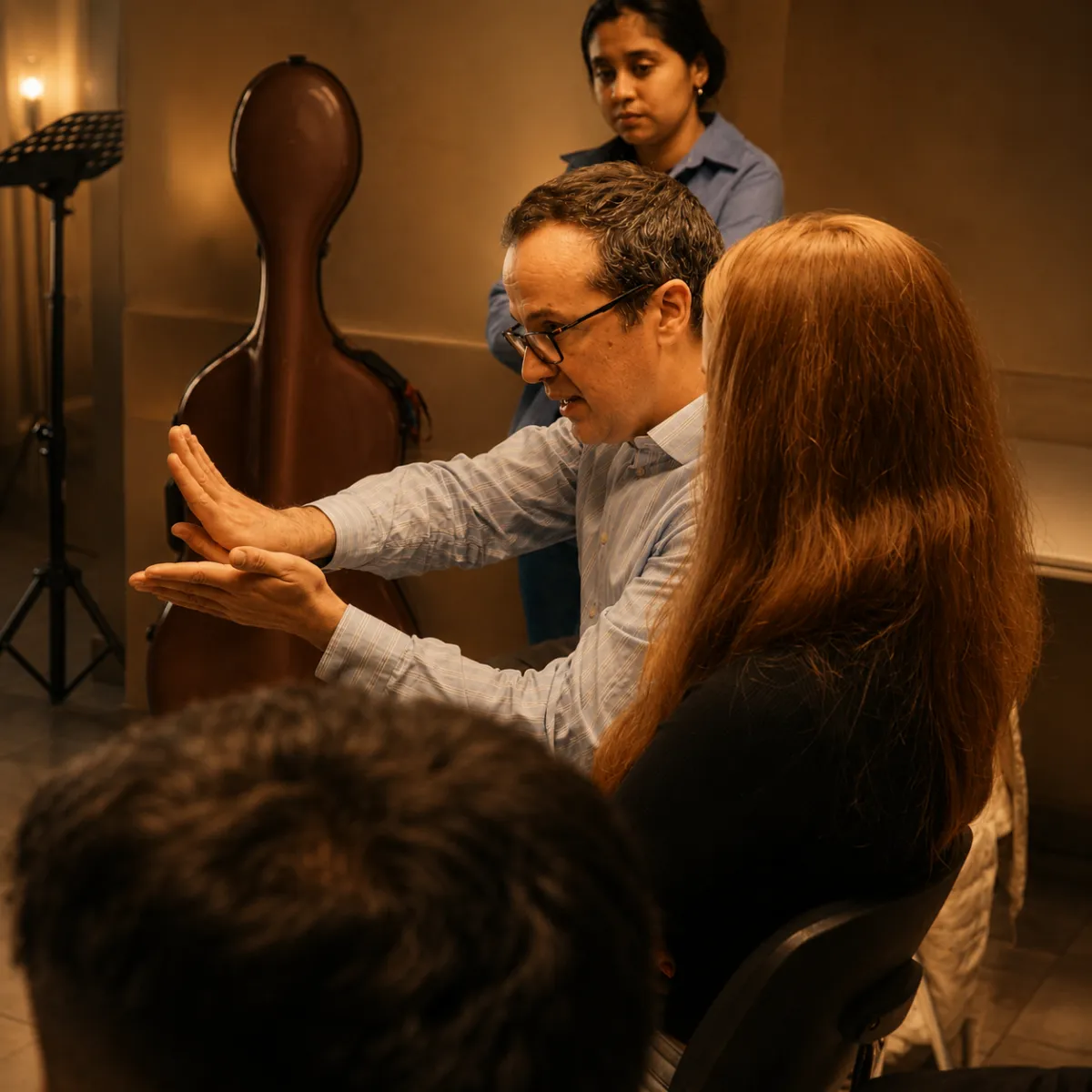
This mentoring is for advanced classical musicians who need clearer interpretation, stronger preparation, or a more realistic artistic and professional direction.
You may be preparing an orchestra audition, a competition, a recital, a chamber music project, a recording, or a specific repertoire programme.
You may also be finishing advanced studies and trying to understand which next step makes sense.
We begin with your current work: the repertoire you are preparing, your level, your artistic questions, your goals, and the next step ahead.
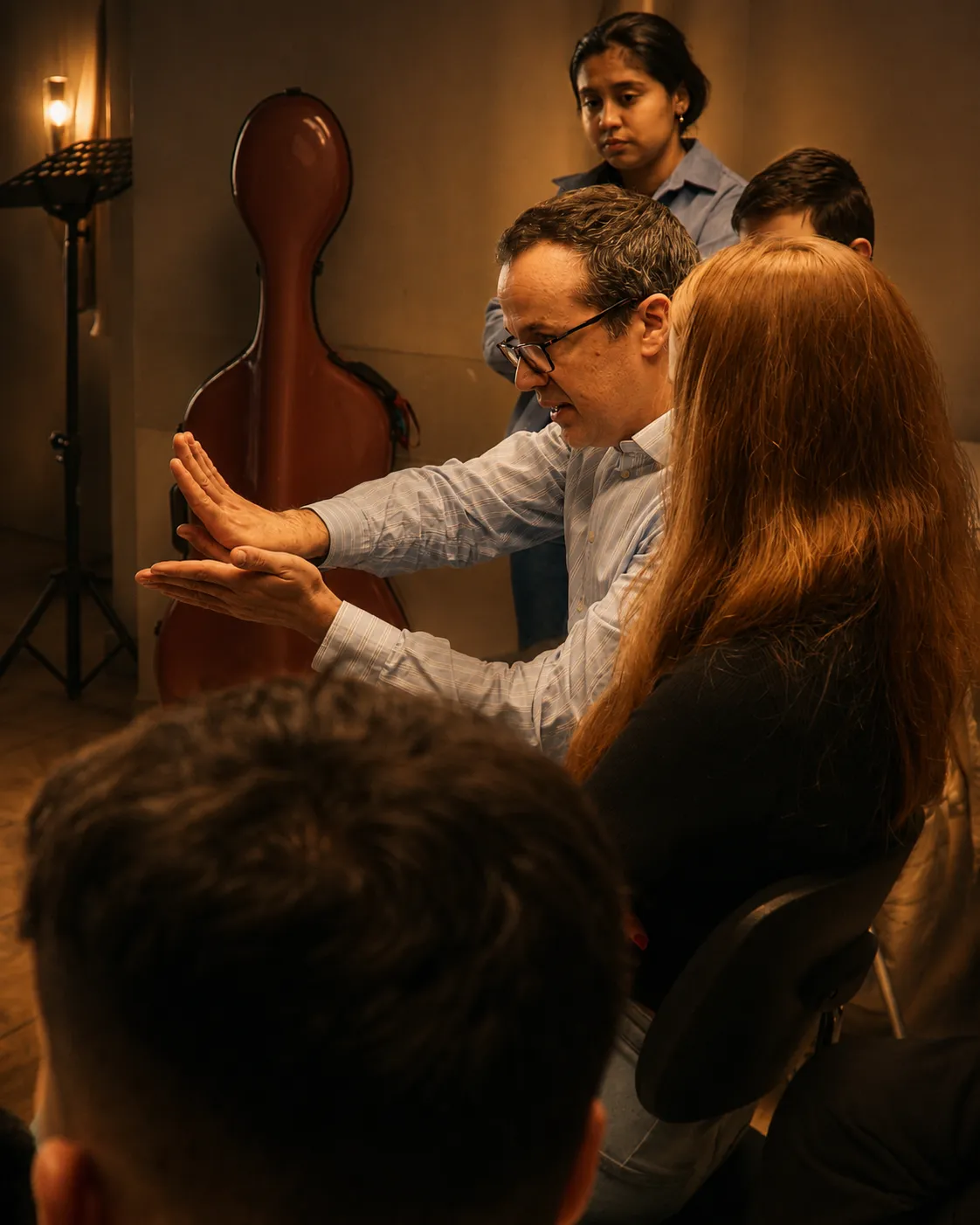
Three
mentoring paths
Three mentoring paths
The mentoring is adapted to the musician, not the other way around
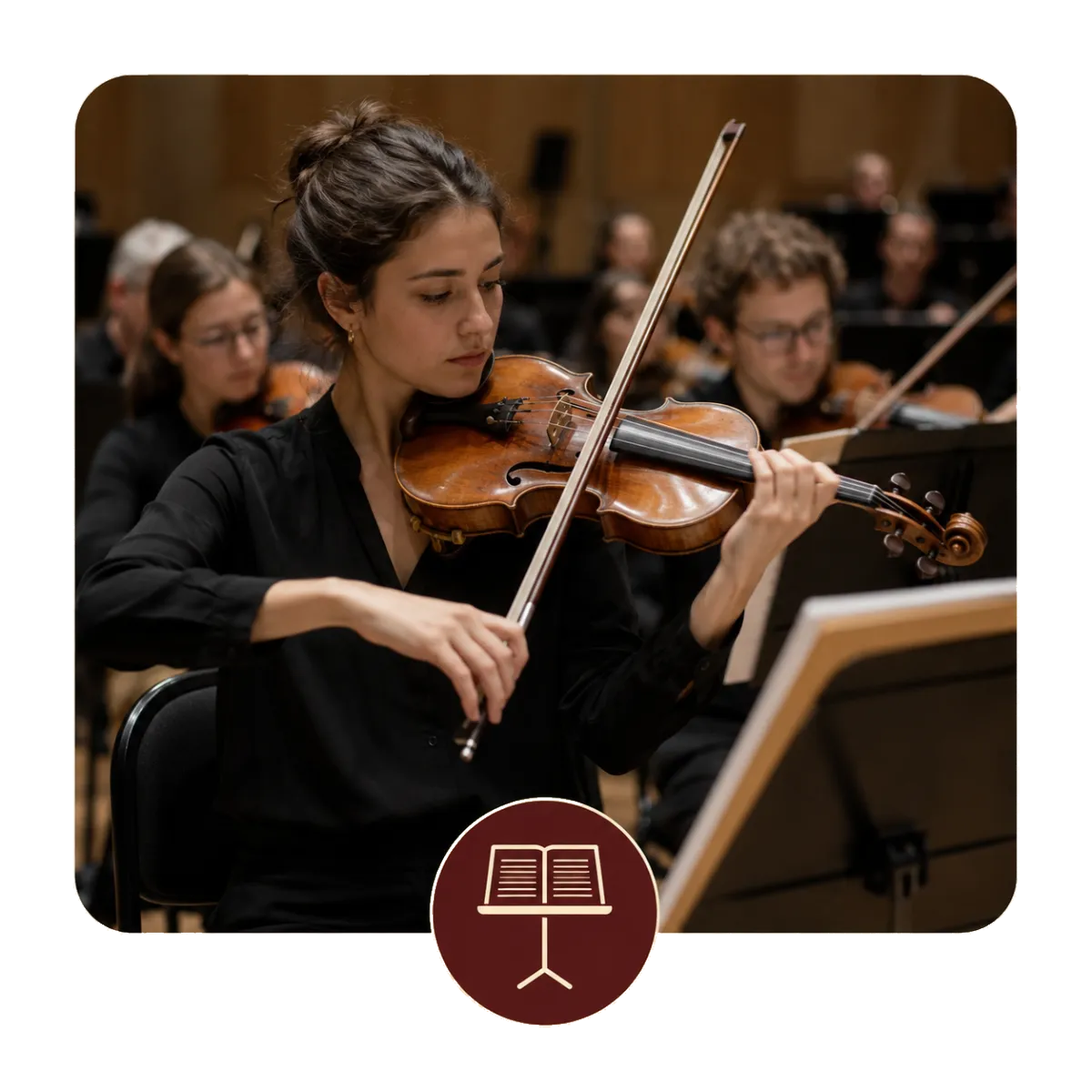
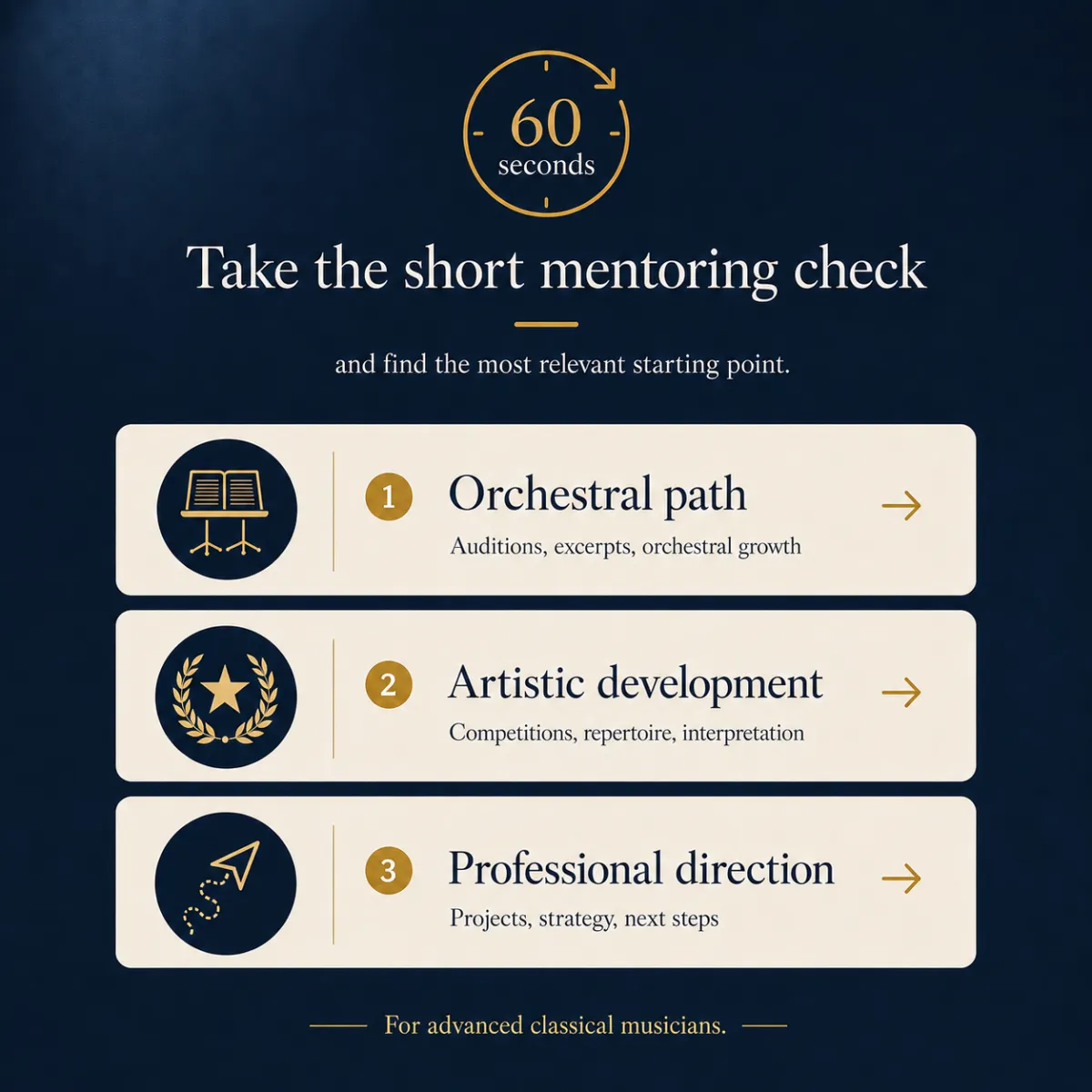
Orchestral path
For musicians preparing orchestra auditions, aiming for a higher-level orchestra, or seeking greater clarity and stability within orchestral playing.
Focus: audition planning, excerpts, main works, score reading, style, stability, and follow-up before and after each audition.
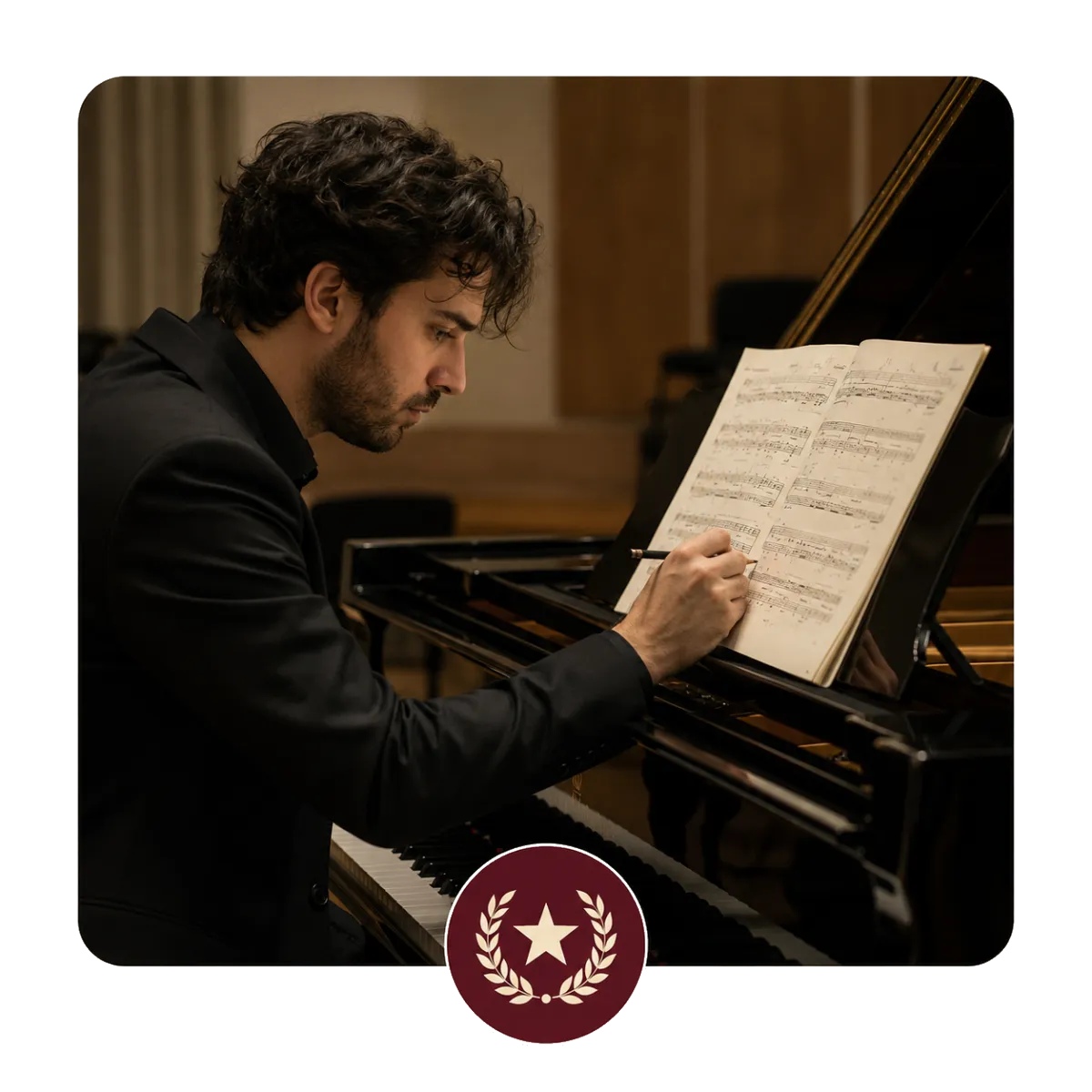
Artistic development & competitions
For musicians preparing solo repertoire, competitions, recordings, recitals or chamber music projects.
Focus: deeper score reading, building a personal interpretation, phrasing, reference recordings, repertoire choices and preparation of the full process.
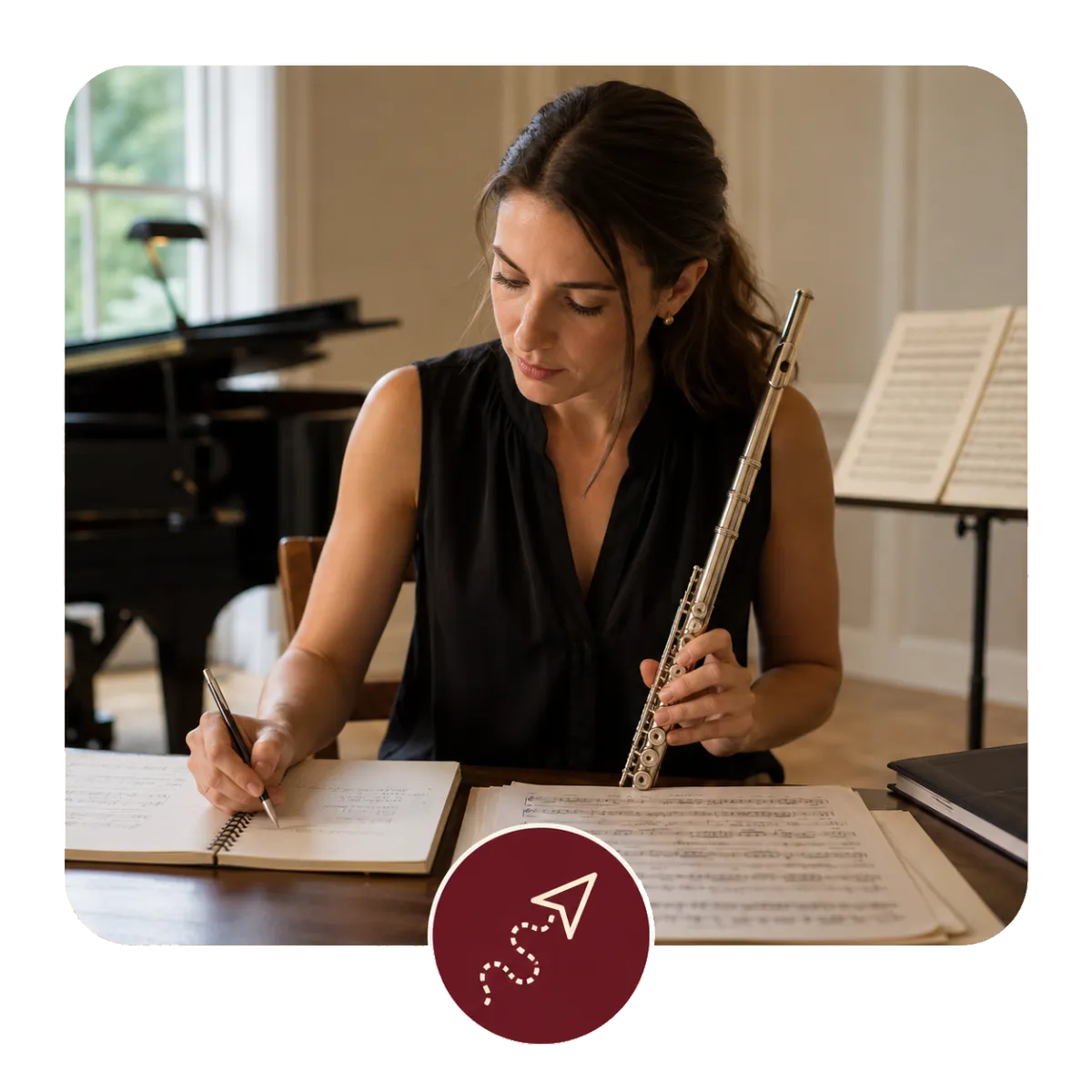
Professional direction & projects
For musicians who need to clarify their next step, create concert opportunities, develop a chamber project, or shape a realistic artistic path after advanced studies.
Focus: dialogue, strategy, artistic identity, self-management and practical next steps.
What we will work on
What we will
work on
The content depends on your situation, but the work usually combines three dimensions
The content depends on your
situation, but the work usually
combines three dimensions
Interpretation
Phrasing and structure
Score reading for interpretative decisions
Rubato, dynamics and musical direction
Articulation, colour and character
Style, proportion and tension/release
Building a personal interpretation
Repertoire
Orchestral excerpts
Solo works
Chamber music
Recital programmes
Recordings projects
Competition repertoire
Artistic & professional direction
Auditions
Competitions
Concert projects
Creating concert opportunities
Career choices
Transition after advanced studies
Artistic identity
The aim is to make your musical decisions clearer, more intentional and more convincing.
The aim is to make your musical decisions clearer, more intentional
and more convincing.
How the mentoring works
How the
mentoring works
Most mentoring is based on a regular weekly online session, usually through FaceTime or Teams. This gives continuity to the work, especially when preparing auditions, competitions, repertoire, concerts, chamber projects or longer-term artistic and professional goals.
Most mentoring is one-to-one. In selected cases, especially with singer–pianist or instrumentalist–pianist duos, the work can also be done with both musicians together.
The mentoring does not replace your main instrumental teacher. It focuses on interpretation, repertoire, artistic decisions, project development and professional direction.
This is not a traditional instrumental lesson or general motivational coaching. It is a regular mentoring process built around your current musical and professional situation.
Watch Maite explaining her program (3').
Sequence: Each lesson builds on the previous one. No random practice.
Small weekly goals: One focus at a time. Progress without being overwhelmed.
Real music early: Technique applied immediately in simple pieces. Motivation stays high
A structured approach
that replaces guessing
with clear progress.
Step by step, with Maite guiding you through the process.
Step by step, with Maite guiding you through the process.
Why many violin
learners feel stuck
Start the mentoring equiry
Start the
mentoring equiry
A short form to understand whether the mentoring may fit your current artistic or professional needs.
A short form to understand whether
the mentoring may fit your current
artistic or professional needs
Tell me about your situation
Answer a few short questions about your instrument, repertoire, goals and current professional context.
Tell me about your situation
Answer a few short questions about your instrument, repertoire, goals and current professional context.
Video lessons: Clear step-by-step lessons you can follow at home.
PDFs and practice notes:
Simple written support for each stage.
Play-alongs: Practice with guided musical support where included.
Shoulder rest and chin rest guidance: A practical lesson to help you understand your setup.
First complete pieces: Apply the technique inside real music from the beginning.
6 months of access: Repeat the lessons as many times as you need.
Practicing becomes frustrating
without a clear sequence.
Book your
15-minute call
1 Confirm details | 2 Choose time | 3 Get link
What you
will learn
Play recognizable melodies while
applying the techniques you learn.
Learn about my teaching
Learn about
my teaching
Small wins boost confidence, which fuels faster learning
Discover how my method will guide your progress week by week
Learn how to set clear goals and maintain high motivation
I will explain how to improve without feeling overwhelmed or stuck
I also discuss why emotional focus is as important as technical focus
Find out in 5 minutes
how my approach works
Who this
program is for
WHAT YOU WILL LEARN
Foundations: Posture, instrument setup, shoulder rest, chin rest and relaxed playing position.
Bow hold and sound: Natural bow hold, first bow movements, open strings and clean tone.
Left hand: A simple map for placing your first fingers with more confidence.
Rhythm and reading: Only the reading you need to start playing clearly.
First pieces: Twinkle Twinkle Little Star, Lightly Row, Song of the Wind and Ode to Joy.
Designed for learners
who want clarity, structure
and a steady progress.
WHO THIS COURSE IS FOR
Starting from zero: Follow the course from the beginning.
Returning after years: Use it to rebuild your foundations in a clear order.
Feeling stuck with the basics: Use it as a checklist for posture, bow hold, sound, left hand, rhythm and first pieces.
Wanting intermediate repertoire now?: This is Module 1: foundations. More advanced work belongs in later modules or direct work with Maite.
About
Cristo Barrios
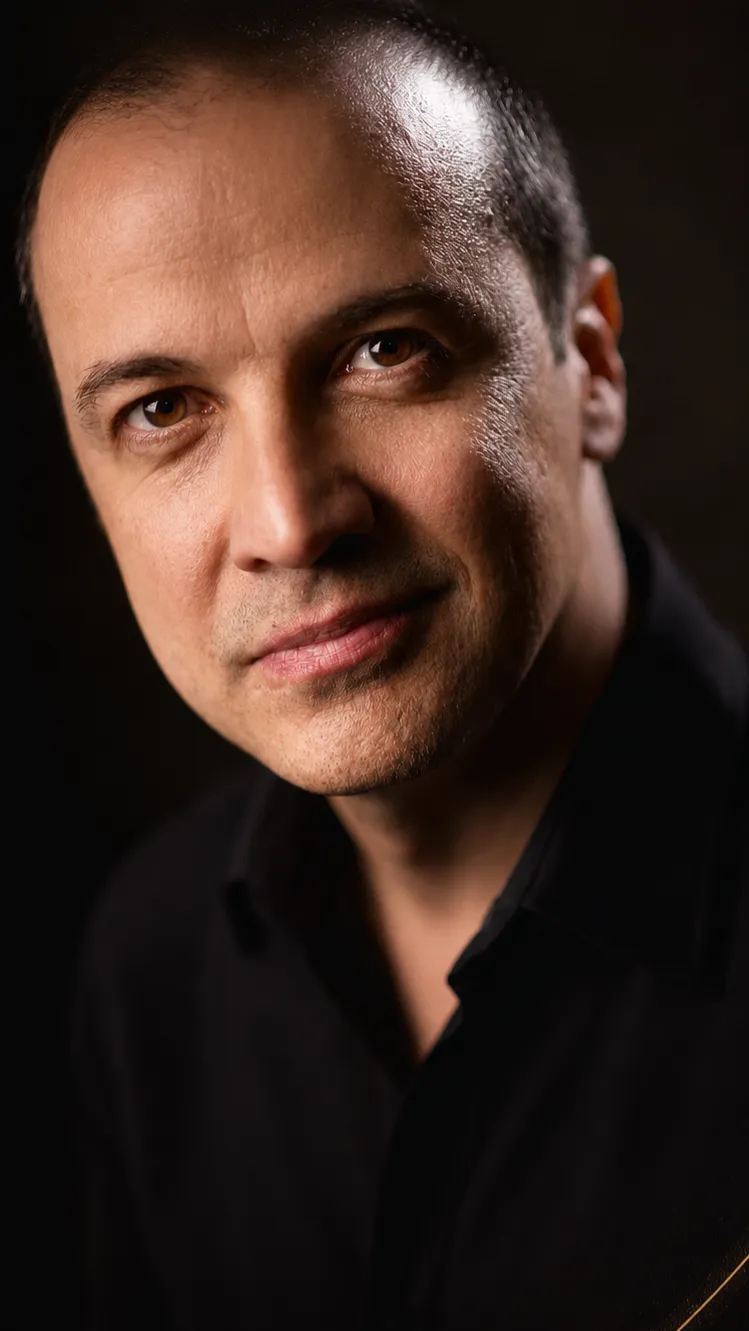
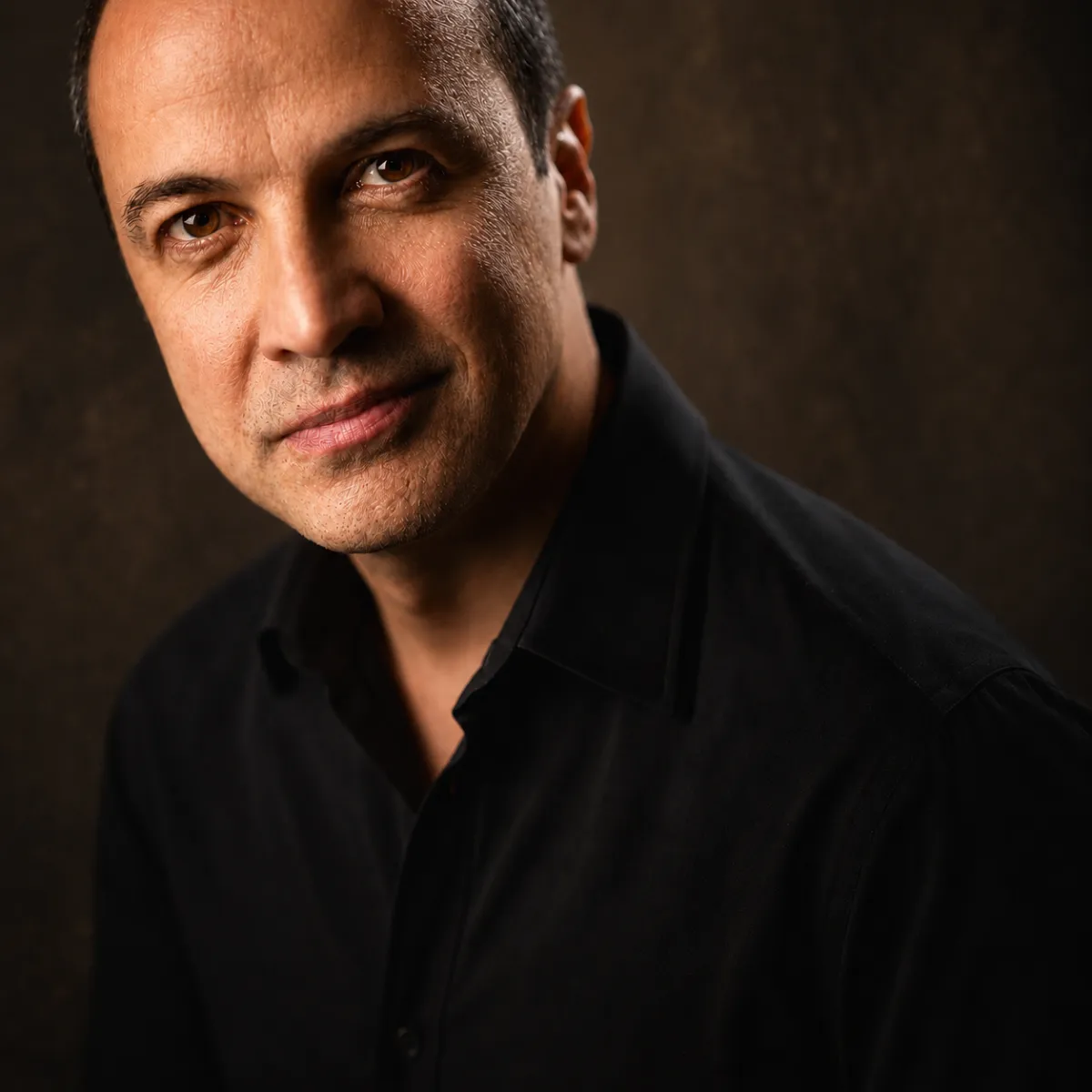
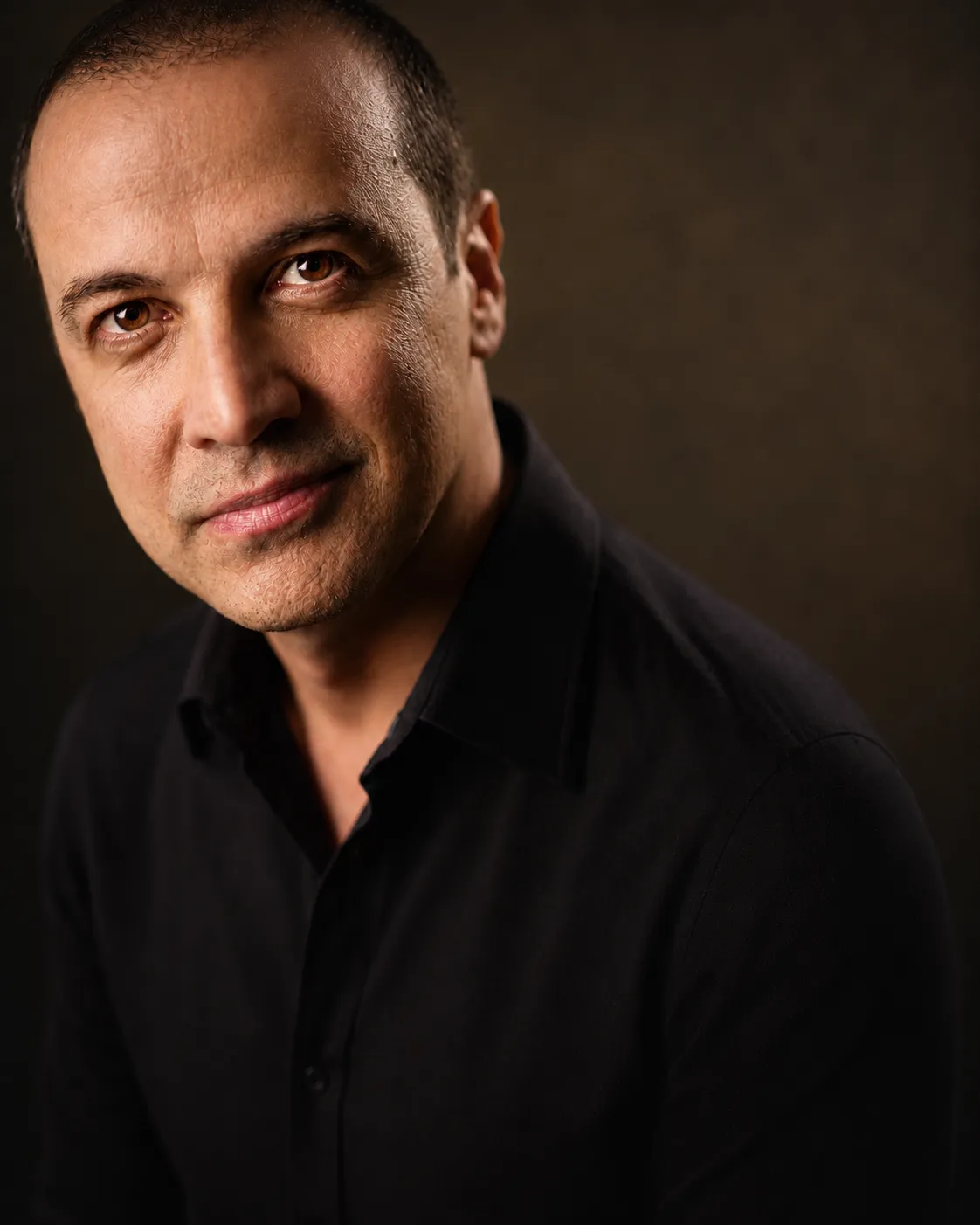
Cristo Barrios is an international clarinettist, chamber musician, former artistic director of Quantum Ensemble and PhD in Musicology. He has performed at Wigmore Hall, the Concertgebouw, Carnegie Hall, Konzerthaus Berlin and the Wiener Konzerthaus.
He has worked with the Fauré, Arditti, Elias, Endellion, Brodsky and Minetti Quartets, and concerto premieres include performances with the Mariinsky Symphony Orchestra conducted by Valery Gergiev.
Since 2013, his teaching at Centro Superior Katarina Gurska has connected performance, repertoire, artistic research and advanced pedagogy, alongside masterclasses at leading European institutions including the Liszt Academy of Music, the Sibelius Academy, the Norwegian Academy of Music and the Conservatorium van Amsterdam.
His discography includes releases on Divine Art, Metier Records, Melomics Records and IBS Classical. His two most recent recordings include a Melómano de Oro award and a clarinet concerto with the Royal Scottish National Orchestra for Signum Classics.
About
Maite Iglesias
25 years helping violin learners
progress with clarity and confidence.
Free bonus video
Watch my video guide to find your perfect shoulder rest
Understand the pros and cons of using a shoulder rest
Discover techniques for playing comfortably without added support
Learn how to avoid injury and improve your sound naturally
Get expert tips on posture, setup, and chin rest choices
Get instant access
to one of my free videos!
Get instant access to
one of my free videos!
Enter your name and email and I will send the step-by-step guide to your inbox. No spam and you can unsubscribe anytime
Choose your
learning format
Choose the level of guidance
that feels right for you
START WITH A
CLEAR FOUNDATION
Get immediate access to Violin Foundations — Module 1
Designed to be completed
in about 3 months.
6 months of access included.
14-day start guarantee.
Details below.
Violin students
who rediscovered
their playing with Maite
Mentee milestones
Outcomes achieved during this year’s one-to-one mentoring with Cristo

Vilma progressed from
beginner pieces to intermediate
repertoire in 3 months

Maite pays close attention to how I play, but she also understands what I want to achieve as a musician. Her method gives me a clear direction for my practice.
VILMA | Primary school teacher
Adult learner — NEW YORK
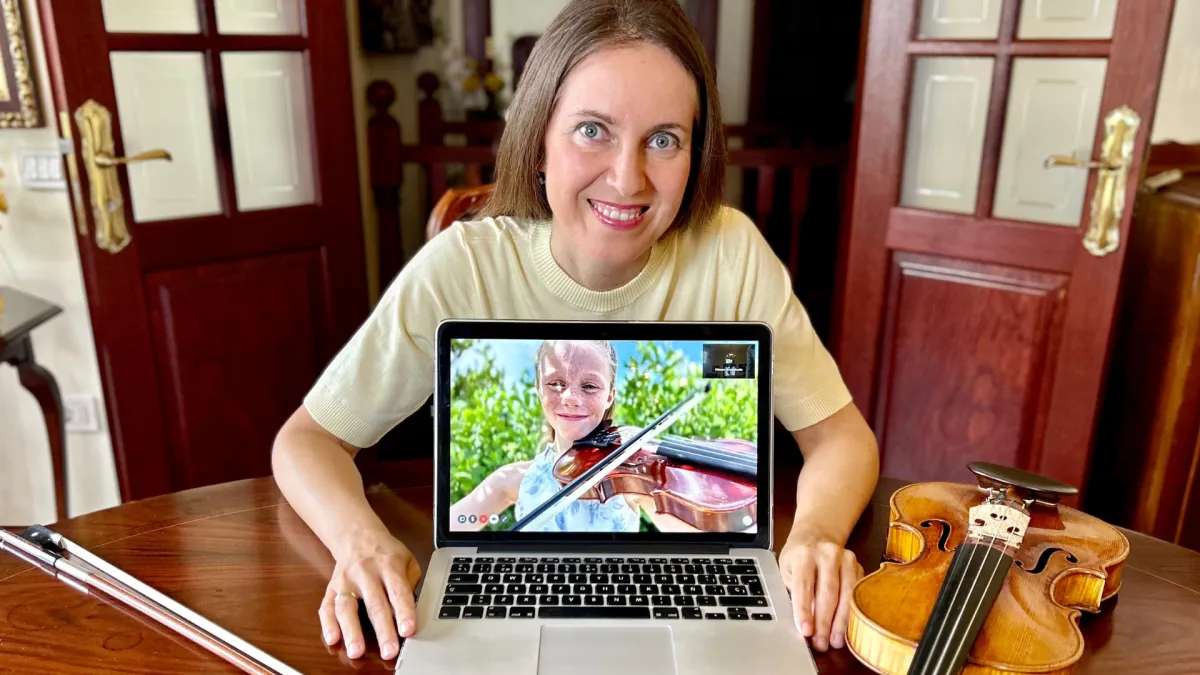
Kendhalia immediately received
a clear and structured learning plan
Maite quickly identifies what my daughter needs to improve. Her corrections are precise and very practical. With a clear structure for practice, her progress has been steady and noticeable.
KENDHALIA'S MOTHER
Young student — FLORIDA
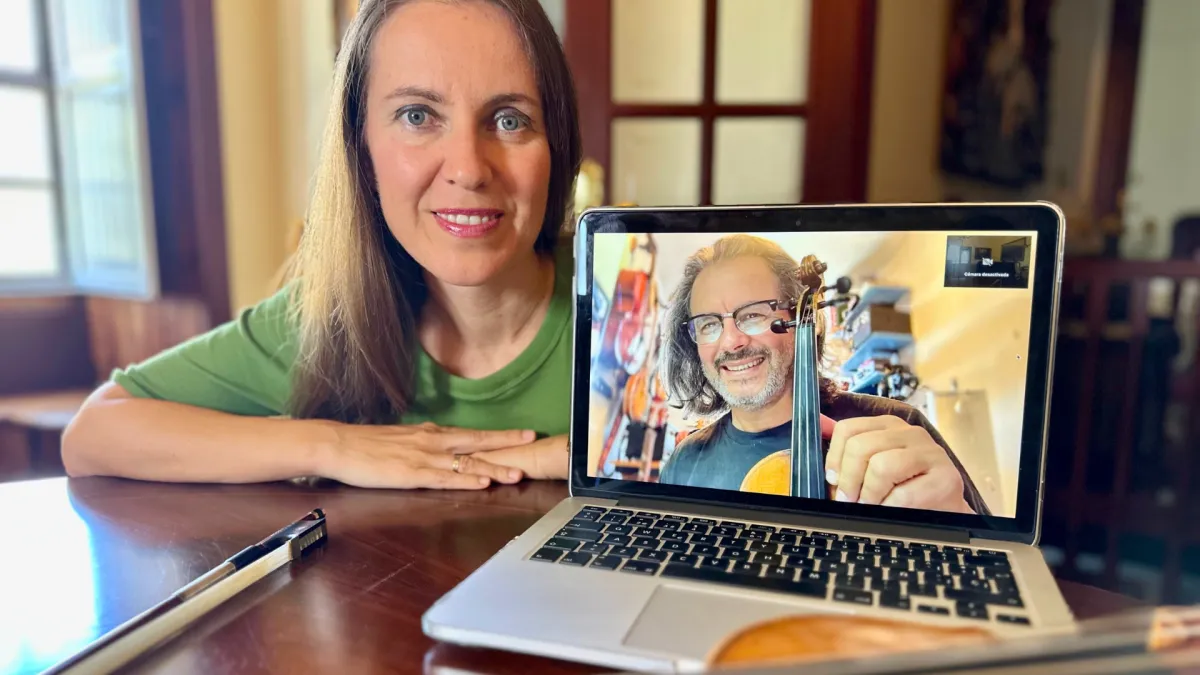
Frank now enjoys
practicing regularly
I used to focus only on “playing well.” But with Maite’s guidance and a consistent way to practice, I now enjoy the process much more. Practicing has become something I genuinely look forward to.
FRANK | Company owner
Adult student — BOSTON
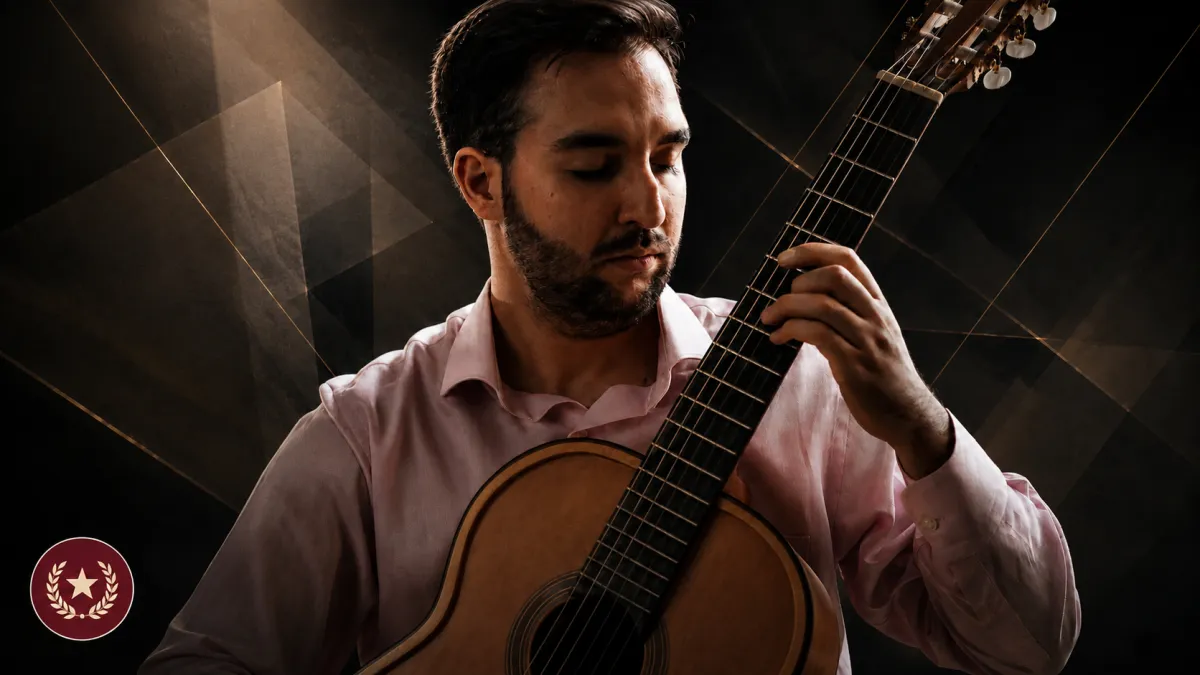
Winner — Miquel Llobet International
Guitar Competition, Barcelona
Winner — Miquel Llobet International
Guitar Competition, Barcelona
Cristo’s mentoring changed my understanding of phrasing and helped me build a clearer, stronger interpretation for competition performance.
Mario Pino (23 years old) | Classical guitarist

Recently appointed — Orchestra of
the Varna State Opera
Recently appointed — Orchestra
of the Varna State Opera
Cristo helped me prepare orchestral auditions with much clearer priorities, stronger excerpt work and a more convincing musical direction.
Diego Bermúdez (24 years old) | Clarinettist
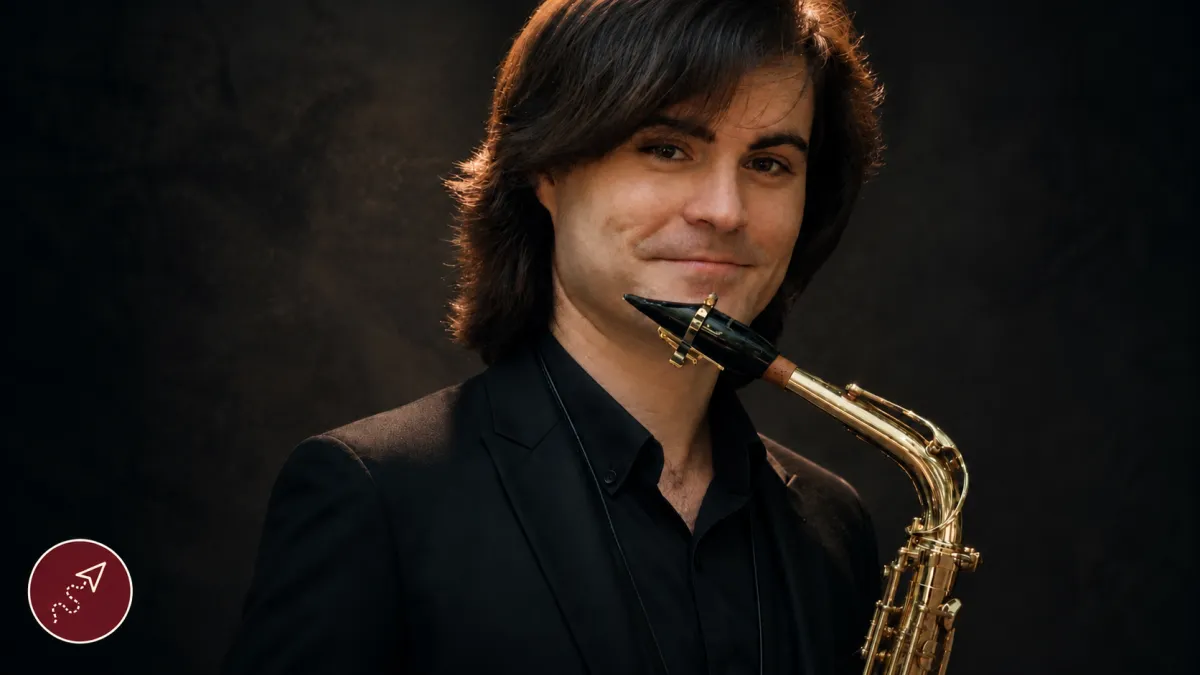
Founder — The Fyra Quartet,
a new saxophone ensemble
Working with Cristo helped me clarify my artistic direction, create a saxophone ensemble and develop real concert opportunities.
Jesús Fernández (30 years old) | Saxophonist
Three paths: competition performance, orchestral audition preparation, and artistic/professional direction.
Frequently
Asked Questions
Still not sure?
Frequently Asked Questions
How do I know if this mentoring could help me?
It may be useful if you are an advanced classical musician and need regular guidance with your interpretation, repertoire, projects or next professional step.
Some mentees prepare auditions or competitions. Others want to create concert opportunities, develop chamber projects, organise their professional direction or clarify what path to follow.
Is the mentoring artistic or professional?
It can be both, depending on your case.
Sometimes the focus is the score, repertoire and interpretation. In other cases, the work is more focused on professional strategy, planning, concert projects, auditions, competitions or decisions about the future.
Does the mentoring follow a fixed programme?
No. The mentoring has method and continuity, but not the same curriculum for everyone.
The work starts from your real situation: what you are preparing, what you need to solve, what your goal is, and what kind of guidance may help you most.
Do we work on my own repertoire or current project?
Yes. The work usually starts from concrete materials: scores, recordings, excerpts, audition pieces, competition repertoire, recital programmes, chamber music or professional projects.
The mentoring starts from what you are currently working on, not from abstract exercises.
What role does the score play in the interpretative work?
A central role.
When the work is interpretative, it begins with a serious reading of the score: structure, character, proportion, tensions, style and the function of each section. From there, we make decisions about phrasing, dynamics, rubato, articulation, timbre and musical direction.
How can the mentoring support an audition, competition, recital or project?
The work is not limited to the final performance.
It can also address the full process: repertoire choice, planning, study priorities, recording preparation, strategy before the event, calendar management, review afterwards and next steps.
Is it suitable for any instrument?
Yes, provided the starting point is advanced.
Each instrument has its own demands, but many problems are shared: score reading, phrasing, style, repertoire, judgement, planning, communication and professional decision-making.
What happens after I send the enquiry?
Cristo will review your situation, your goals and the kind of help you are looking for.
If the mentoring seems appropriate, the next step is to consider how to begin a regular process of work, usually week by week, with clear goals and enough continuity for the mentoring to be useful.